recent alert

earthquake-icon

earthquake update

weather-icon

weather update

news & updates

view more

July 17, 2026

जेन-जी (Zen-Z) आन्दोलनको क्रममा घाइते भएका व्यक्तिहरूको विवरण (जम्मा २६५६ जनाको विवरण)

जेन-जी (Zen-Z) आन्दोलनको क्रममा घाइते भएका व्यक्तिहरूको विवरण (जम्मा २६५६ जनाको विवरण)

read more

February 03, 2026

Press Release - Nipah Virus

Press Release - Nipah Virus

read more

December 23, 2025

जेन जी आन्दोलनको क्रममा घाइते भई उपचाररत घाइतेहरूको स्वास्थ्य तथा जनसंख्या मन्त्रालयलाई विभिन्न अस्पतालहरूबाट प्राप्त विवरण

जेन जी आन्दोलनको क्रममा घाइते भई उपचाररत घाइतेहरूको स्वास्थ्य तथा जनसंख्या मन्त्रालयलाई विभिन्न अ...

read more

December 02, 2025

एम्बुलेन्स र शववाहनको विवरण उपलब्ध गराउने सम्बन्धी अत्यन्त जरूरी सूचना !!!

एम्बुलेन्स र शववाहनको विवरण उपलब्ध गराउने सम्बन्धी अत्यन्त जरूरी सूचना !!!

read more

November 12, 2025

प्रेस विज्ञप्ति - जेनजी प्रदर्शनका घाइतेहरूको वर्गीकरण सम्बन्धमा

प्रेस विज्ञप्ति - जेनजी प्रदर्शनका घाइतेहरूको वर्गीकरण सम्बन्धमा

read more

October 04, 2025

सम्भावित जोखिमका लागि तयारी अवस्थमा रहने सम्बन्धमा

सम्भावित जोखिमका लागि तयारी अवस्थमा रहने सम्बन्धमा

read more

welcome to HEOC

The Health Emergency Operation Center (HEOC) in Nepal plays a crucial role in coordinating and managing the response to various disasters and public health emergencies. Established in 2014 with the support of the World Health Organization (WHO), the HEOC operates as the secretariat of the Ministry of Health and Food Safety (MoHFS) during any public health emergencies or disasters.

During the devastating earthquake that struck Nepal in 2015, the HEOC was immediately activated, aiding in the streamlined efforts at the central level. Since then, the HEOC has been the main coordinating center for the health sector's response during subsequent events such as floods, landslides, windstorms, and the ongoing COVID-19 pandemic.

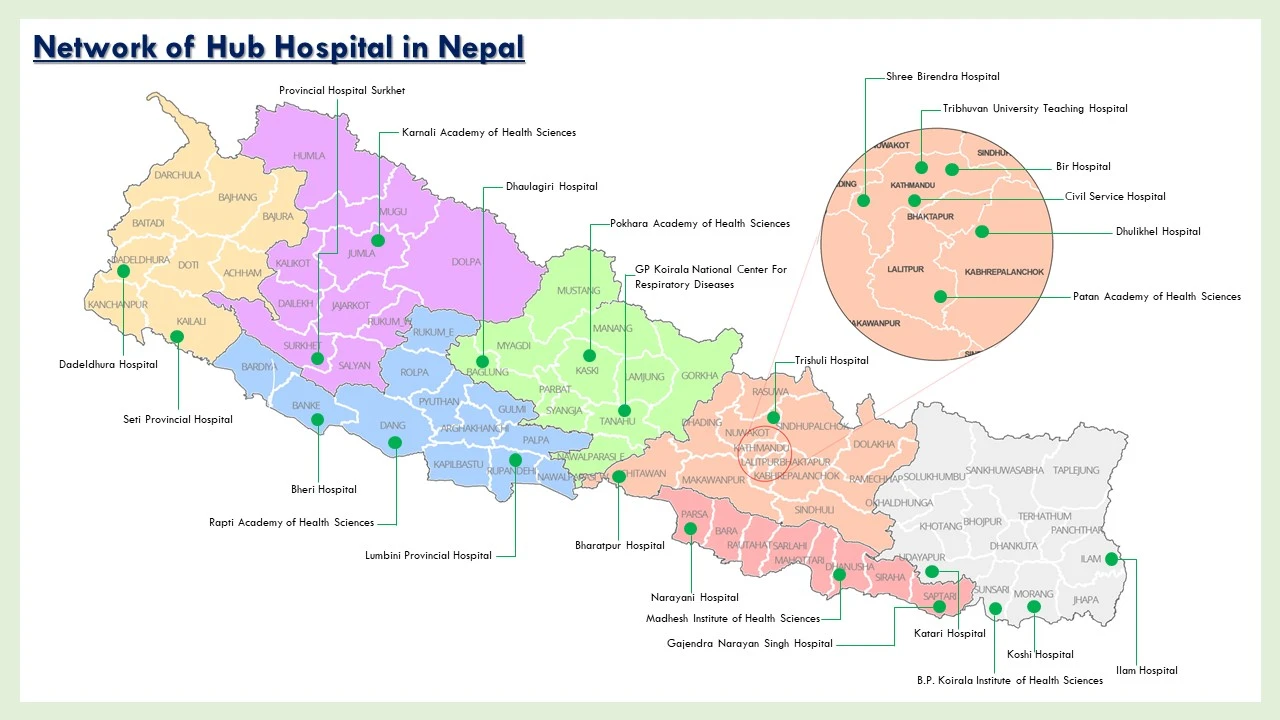
In addition to its role in response coordination, the HEOC is responsible for preparedness and readiness activities. It facilitates the establishment and strengthening of hub and satellite hospitals networks, the formation and orientation of Emergency Medical Team (EMTs), stockpiling of emergency medical logistics warehouses, and the conduction of Emergency Care System Assessments. These activities, conducted as part of disaster recovery interventions, have helped strengthen Nepal's health security.

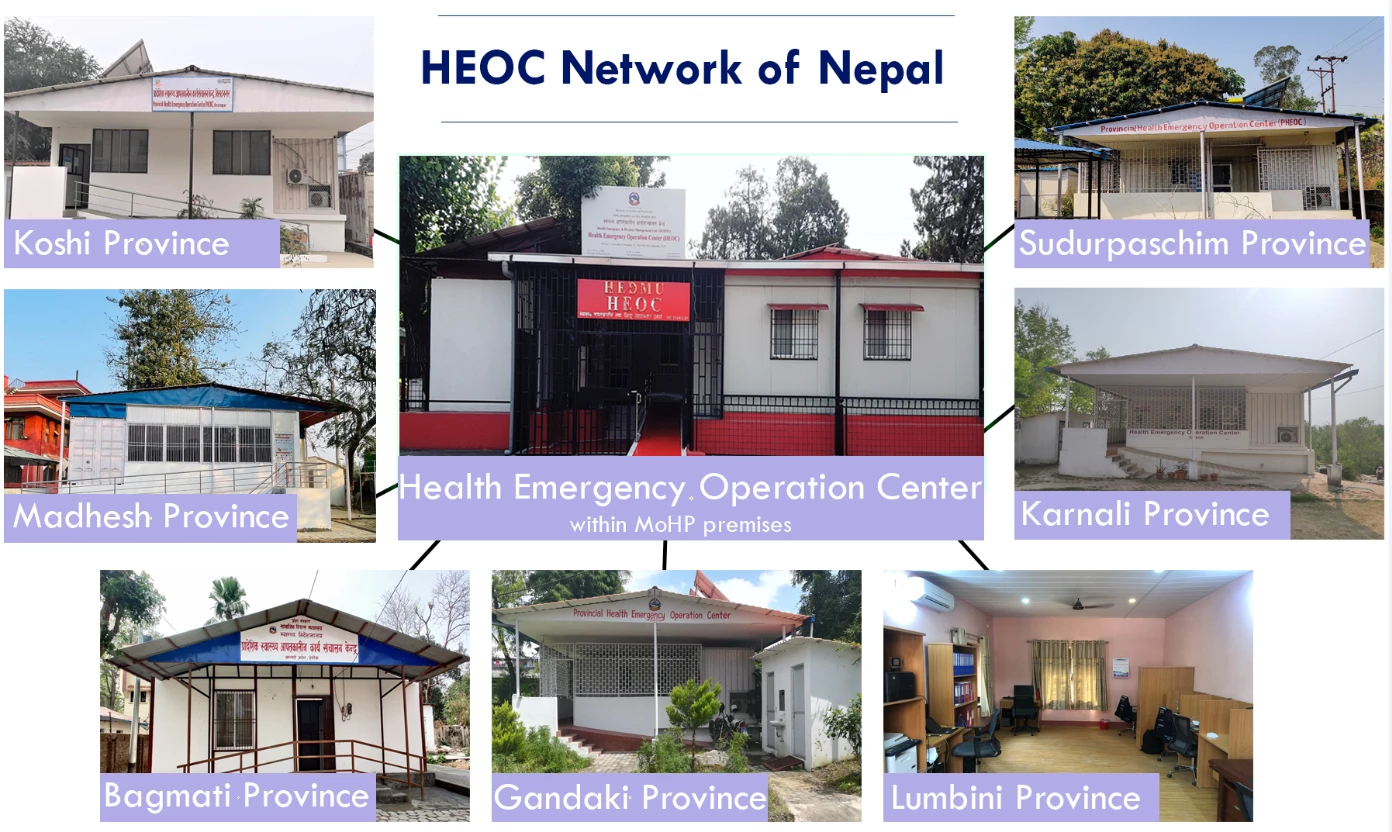
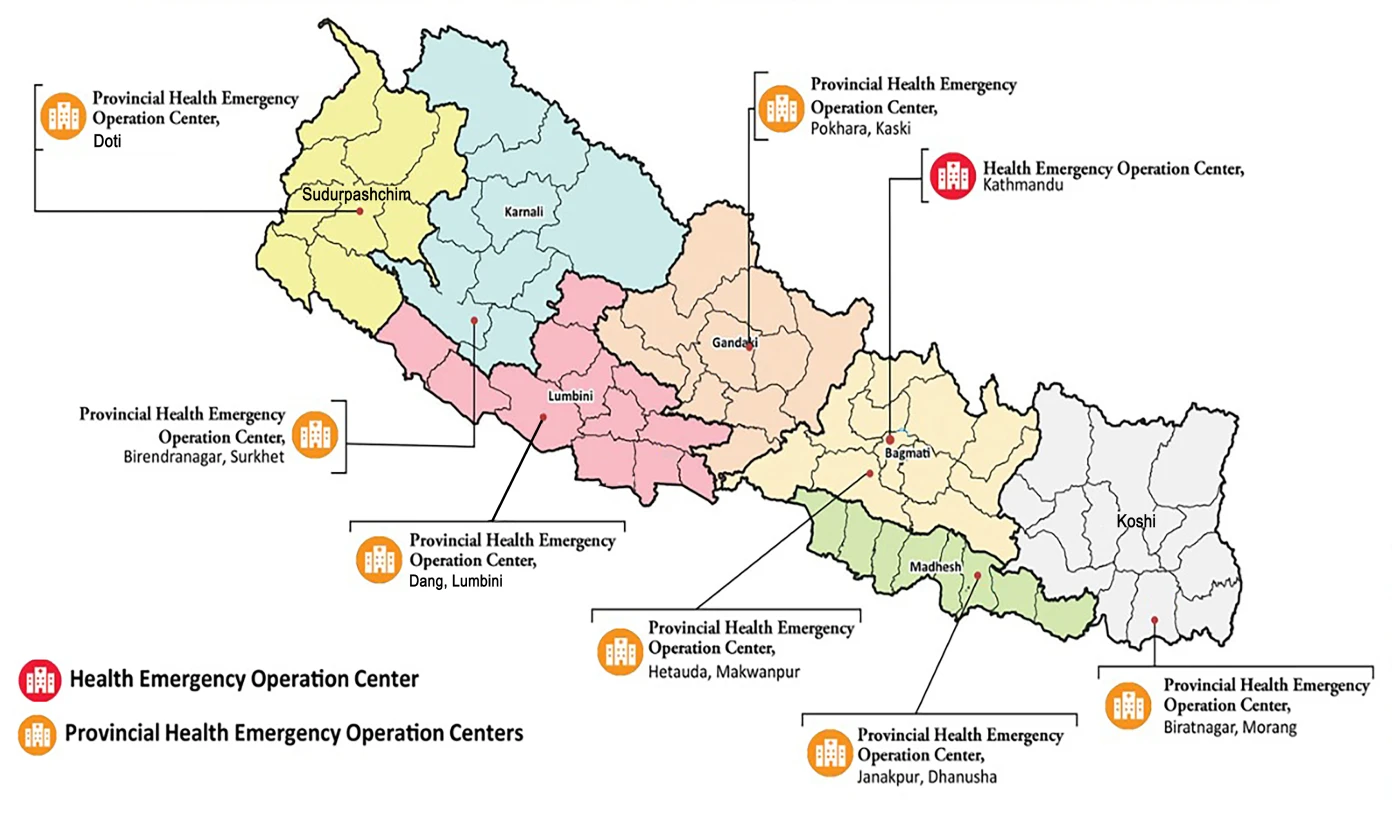
Recognizing the need for decentralized coordination, Provincial Health Emergency Operation Centers (PHEOCs) have been established in all seven provinces of Nepal. These PHEOCs have played a vital role in coordinating and supporting the response during various disasters, including the ongoing COVID-19 response.

To further enhance Nepal's capacity to mitigate disaster risks and respond effectively to public health emergencies, it is necessary to develop, strengthen, and maintain the country's readiness. This includes ongoing efforts to improve coordination mechanisms, invest in infrastructure and resources, and ensure preparedness at both the central and provincial levels. By optimizing the use of available resources and adopting a coordinated approach, Nepal can enhance its ability to effectively respond to health emergencies and protect the well-being of its population.

read more

Message From Chief, HEDMU/HEOC

Dr Hemant Chandra Ojha

Nepal is highly vulnerable to natural disasters, disease outbreaks and other public health emergencies. Further, the diverse geography, climatic conditions and underlying socioeconomic vulnerabilities require strong preparedness, readiness and timely response to protect lives and sustaining essential health services. The establishment of the Health Emergency Operation Centre (HEOC) in 2014, and its institutional strengthening under the Health Emergency and Disaster Management Unit (HEDMU) in 2018, marked an important step in strengthening Nepal’s health emergency management capacity. Today, HEDMU/HEOC serves as a key coordination and operational platform within the Ministry of Health and Food Safety, working closely with the NEOC, NDRRMA, security agencies, provincial and local governments, PHEOCs, hub and satellite hospitals, health facilities and partners. Over the years, Nepal has strengthened important components of its health emergency architecture, including Incident Command System arrangements, RRTs and EMTs, hub and satellite hospital networks, hospital disaster preparedness, pre-hospital and ambulance services, emergency medical logistics, surveillance and information management systems. Lessons from the 2015 earthquake, COVID-19 pandemic and subsequent emergencies have continually informed the development and refinement of our policies, plans and operational procedures. Our preparedness, however, cannot remain static. In line with the International Health Regulations (IHR) 2005, we must continuously assess risks, strengthen core capacities, address gaps and institutionalize lessons from every emergency. This includes strengthening emergency workforce readiness, surveillance and early warning, emergency medical and pre-hospital care, logistics, information management, coordination and the capacity of health facilities to maintain essential services during crises. Timely, reliable and actionable information is central to effective emergency decision-making. HEOC will continue to strengthen the collection, analysis and sharing of critical epidemiological, operational and resource information to support coordinated action and informed decisions at all levels. As the coordination and operational platform for health emergency preparedness and response, HEDMU/HEOC remains committed to working with all levels of government, health professionals, communities and partners to build a resilient and responsive health system. To the people of Nepal, preparedness is a shared responsibility. We encourage every individual, family and community to stay informed, be aware of the risks around them, follow public health guidance and support one another during emergencies. Together, through preparedness, timely action and collective responsibility, we can reduce the impact of emergencies and protect the health and well-being of our people.

read more
director-message

Health Emergency as a cycle

Health emergencies can be understood as a cycle that involves different stages, from preparedness to response and recovery. Understanding this cycle can help governments, organizations, and individuals to plan and respond to health emergencies effectively.

Guidelines & Publications

Developing response plans, standard operating procedures, and protocols in collaboration with relevant stakeholders to ensure readiness for health emergencies.

जेन-जी (Zen-Z) आन्दोलनको क्रममा घाइते भएका व्यक्तिहरूको विवरण (जम्मा २६३८ जनाको विवरण)

February 25, 2026

जेन-जी (Zen-Z) आन्दोलनको क्रममा घाइते भएका व्यक्तिहरूको विवरण (जम्मा २६३८ जनाको विवरण)

जेन-जी (Zen-Z) आन्दोलनको क्रममा घाइते भएका व्यक्तिहरूको विवरण (जम्मा २५९९ जनाको विवरण)

read more
आपतकालिन अवस्थामा बैकल्पिक उपचार क्षेत्र निर्देशिका, २०८२

January 23, 2026

आपतकालिन अवस्थामा बैकल्पिक उपचार क्षेत्र निर्देशिका, २०८२

आपतकालिन अवस्थामा बैकल्पिक उपचार क्षेत्र निर्देशिका, २०८२

read more
देशका विभिन्न आन्दोलन, द्वन्द तथा प्राकृतिक प्रकोपका घाईतेहरुलाई औषधी उपचार गरे वापत अस्पतालहरुलाई सोधभर्ना सम्बन्धी कार्यविधि, २०८२

December 18, 2025

देशका विभिन्न आन्दोलन, द्वन्द तथा प्राकृतिक प्रकोपका घाईतेहरुलाई औषधी उपचार गरे वापत अस्पतालहरुलाई सोधभर्ना सम्बन्धी कार्यविधि, २०८२

देशका विभिन्न आन्दोलन, द्वन्द तथा प्राकृतिक प्रकोपका घाईतेहरुलाई औषधी उपचार गरे वापत अस्पतालहरुलाई सोधभर्ना सम्बन्धी कार्यविधि, २०८२

read more
जेनजी प्रदर्शनका घाइतेहरूको वर्गीकरण सम्बन्धि कार्यविधि २०८२

December 18, 2025

जेनजी प्रदर्शनका घाइतेहरूको वर्गीकरण सम्बन्धि कार्यविधि २०८२

जेनजी प्रदर्शनका घाइतेहरूको वर्गीकरण सम्बन्धि कार्यविधि २०८२

read more

information portal

Collecting, organizing, and analyzing data related to the health emergency to inform decision-making and improve response strategies.

PHEOCs

provincial health emergency operation centers (PHEOCs)

Hospital Safety Index Plus (HSI+)

Hospital Safety Index Plus (HSI+)

Ambulance Nepal

emergency medical services to people in need

Health Cluster

partners- technical, operational & coordination surge capacities

Disaster Knowledge

information and knowledge on disaster risk reduction

event calendar

Providing timely and accurate information to the public, media, and stakeholders about the health emergency, preventive measures, and response efforts.

Latest event list

view more

Health cluster partners

Health Cluster Partners refer to organizations, agencies, institutions, and entities that collaborate within the framework of a Health Cluster. Health Clusters are coordination mechanisms established during humanitarian emergencies to ensure a coordinated and effective response to health needs.

quick links

provide convenient and rapid access to specific content or features